

How to Clean a Compression Sofa and Preserve Its Lifespan?
As senior designers and manufacturing experts at Wenaifurniture, we continuously explore the intersection of aesthetic appeal, everyday functionality, and sustainable living. In recent years, the furniture industry has experienced a massive shift toward highly efficient, transportable designs. Compressed sofas offer numerous benefits: they are environmentally friendly, as their compact packaging reduces shipping emissions and waste. Their low price makes them an affordable option for anyone furnishing their home, without compromising on quality. Additionally, they are highly convenient, as the compressed design allows for easy transport and quick setup, making them ideal for modern lifestyles. However, with this innovative design comes a critical question from our clientele: how to clean a compression sofa effectively without damaging the specialized high-rebound foams and premium fabrics.

From our experience, traditional heavy-duty cleaning methods meant for rigid, wood-framed upholstery do not always translate well to all-foam, compressible structures. When you clean a compression sofa, you must account for the unique cellular structure of the high rebound sponge and the environmentally friendly soft cotton layers that allow the furniture to be compressed into a small volume for easy transportation and handling. Applying too much water or the wrong chemical solvent can degrade the foam's ability to maintain its shape, compromising the unique curved armrest and curved seat surface design that gives these pieces their modern flair. In this comprehensive guide, we will detail exactly how to clean a compression sofa, ensuring your Wenaifurniture investment remains pristine, comfortable, and hygienic for years to come.
Table of Contents
- Summary Table: Compression Sofa Cleaning Methods Overview
- Understanding the Anatomy of a Compression Sofa
- Step-by-Step Guide: How to Clean a Compression Sofa
- Fabric-Specific Care: Chenille Corduroy and Snowflake Velvet
- Wenaifurniture Product Spotlight: Designed for Easy Maintenance
- Crucial Mistakes: What to Avoid When You Clean a Compression Sofa
- Professional Drying Techniques for High Rebound Sponges
- Frequently Asked Questions (FAQs)
- Industry References
Summary Table: Compression Sofa Cleaning Methods Overview
To provide a quick reference for our readers, we have compiled an expert overview of the standard procedures required to clean a compression sofa. We recommend bookmarking this table for routine maintenance scheduling.
| Cleaning Action | Recommended Frequency | Tools & Solutions Required | Primary Benefit |
|---|---|---|---|
| Dry Vacuuming | Weekly | Upholstery attachment, soft bristle brush | Prevents dust accumulation in the high rebound sponge and environmentally friendly soft cotton. |
| Spot Treatment | Immediately after a spill | Microfiber cloth, distilled water, mild pH-neutral detergent | Prevents stains from setting into Chenille Corduroy or Snowflake Velvet fabrics without soaking the foam. |
| Dry Solvent Cleaning | Every 6 to 8 months | Water-free upholstery solvent, soft sponge | Deep cleans oil-based stains safely to effectively clean a compression sofa without water saturation. |
| Professional Extraction | Every 12 to 18 months | Low-moisture professional extraction machine | Revitalizes the entire foam core structure and lifts deeply embedded particulates. |
Understanding the Anatomy of a Compression Sofa
Before you attempt to clean a compression sofa, it is vital to understand what happens beneath the fabric. At Wenaifurniture, our compressible models are engineered using advanced material science. The core consists of a high rebound sponge layered with environmentally friendly soft cotton. This specific architecture is what allows the sofa to be compressed into a small volume for easy transportation and handling. When unpacked, the high rebound sponge intakes air, expanding rapidly to form the unique curved armrest with a curved seat surface design.
Because the core relies heavily on open-cell foam to achieve this rebound effect, the materials are highly porous. From our experience, if liquid penetrates the outer fabric and soaks into the high rebound sponge, it can become trapped. Trapped moisture inside a compression sofa can lead to mold, mildew, and structural degradation, permanently ruining the compression recovery properties. Therefore, the fundamental rule when you clean a compression sofa is moisture control. You are not just cleaning a piece of fabric; you are maintaining a complex pneumatic sponge system.
Step-by-Step Guide: How to Clean a Compression Sofa
We recommend a systematic approach when it is time to clean a compression sofa. Rushing the process or using excessive force will damage both the soft cotton batting and the specialized upholstery.
Phase 1: Thorough Dry Debris Removal

The first step to clean a compression sofa is always dry removal. Dirt and dust act like microscopic sandpaper against fabric fibers. Over time, as you sit on the sofa, this dirt cuts into the Chenille Corduroy or Snowflake Velvet, causing premature balding of the fabric. Use a vacuum equipped with an upholstery brush. Pay special attention to the unique curved armrest and the crevices around the curved seat surface design, as crumbs and dust naturally migrate to these low points. We recommend performing this dry vacuuming at least once a week.
Phase 2: Formulating the Right Cleaning Solution
When you need to clean a compression sofa to remove specific stains, avoid store-bought heavy carpet cleaners. Instead, mix one cup of distilled water with three drops of a mild, clear dish detergent. Agitate the mixture until thick suds form. You will use only the suds, not the liquid water, to clean a compression sofa. This dry-foam technique ensures the moisture stays on the surface fabric and does not penetrate down into the high rebound sponge.
Phase 3: The Blotting Technique
Apply the foam suds to the stained area using a clean microfiber cloth. Never rub or scrub the stain. Scrubbing pushes the contaminant deeper into the environmentally friendly soft cotton and distorts the pile of the velvet or corduroy. Instead, blot gently. Press down firmly to lift the stain into the cloth. Rotate the cloth frequently so you are always using a clean section. From our experience, patience during the blotting phase is the secret to flawlessly learning how to clean a compression sofa.
Fabric-Specific Care: Chenille Corduroy and Snowflake Velvet
Wenaifurniture utilizes premium fabrics that demand specific handling. How you clean a compression sofa wrapped in Chenille Corduroy differs slightly from one wrapped in Snowflake Velvet.
Chenille Corduroy: This fabric features raised ridges known as wales. When you clean a compression sofa with this material, you must always brush the fabric in the direction of the wales after cleaning to restore its texture. If the fabric dries while flattened, it will appear permanently stained or crushed. We recommend using a soft suede brush for this task.
Snowflake Velvet: Velvet is luxurious but sensitive to heat and pressure. To clean a compression sofa featuring Snowflake velvet fabric, avoid any form of heat extraction or hot water. Heat will melt the synthetic fibers, causing irreversible shiny patches. Always use cold water suds, and gently brush the pile upward while it is drying to maintain that soft, multidimensional snowflake appearance.
Wenaifurniture Product Spotlight: Designed for Easy Maintenance
At Wenaifurniture, our design philosophy revolves around the concept that no installation required, super convenient, saving time applies not only to the setup but also to the lifespan maintenance of the product. We have engineered two flagship models that perfectly illustrate how a premium build makes it easier to clean a compression sofa.
1. Wenaifurniture Teddy Compressible Sofa Apartment Single Schlaf Sofa Bed Small Sectional Foam Sofa

This model exemplifies modern convenience. Crafted with a premium high rebound sponge and environmentally friendly soft cotton, it guarantees a supportive seating experience. The exterior is wrapped in a durable Chenille Corduroy fabric that resists deep soiling, making it exceptionally easy to clean a compression sofa of this caliber. One of the greatest product selling points is that there is no installation required, super convenient, saving time right out of the box. It is compressed into a small volume for easy transportation and handling. The aesthetic is defined by its unique curved armrest with a curved seat surface design, which we specifically engineered to minimize sharp corners where dirt traditionally gathers.
2. Wenaifurniture Apartment Folding Couch Bed Small Sectional Sofa Compression Foam Sofa
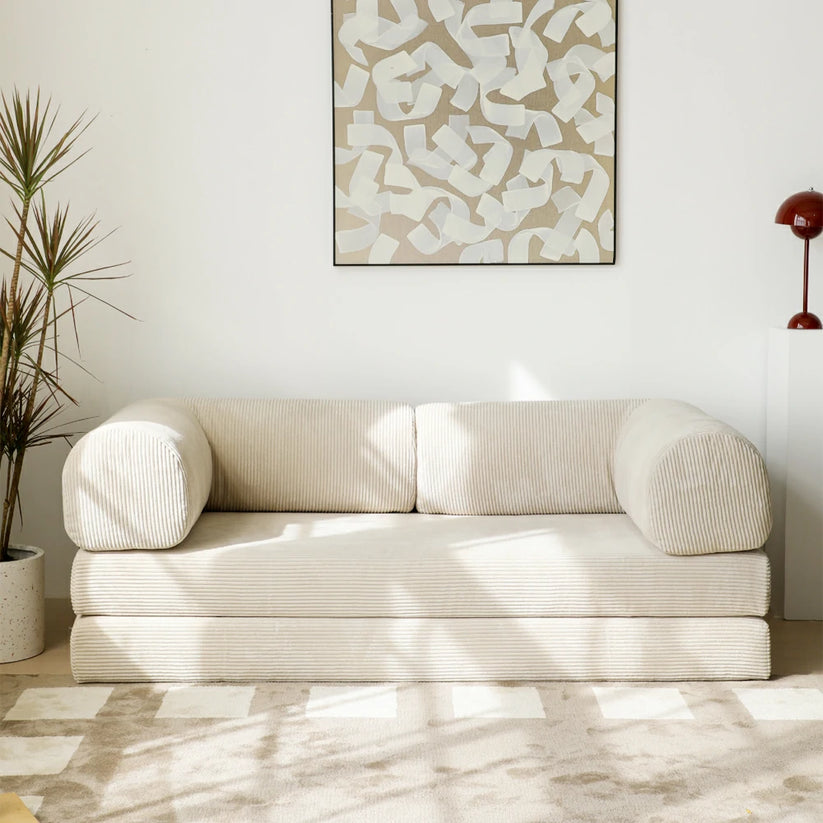
For those who prefer a different tactile experience, this model utilizes a luxurious Snowflake velvet fabric. Despite its high-end appearance, it retains the core benefits of our line: high rebound sponge and environmentally friendly soft cotton. It shares the same robust product selling points, meaning no installation required, super convenient, saving time. It is also compressed into a small volume for easy transportation and handling. The unique curved armrest with curved seat surface design provides excellent ergonomic support. From our experience, customers find that when they need to clean a compression sofa with our Snowflake velvet, the stain-resistant treatments applied during manufacturing make the dry-foam blotting technique highly effective.
Crucial Mistakes: What to Avoid When You Clean a Compression Sofa
To protect your investment, there are several common cleaning habits you must absolutely avoid. Learning how to properly clean a compression sofa is just as much about knowing what not to do.
- Never use excess water: Soaking the high rebound sponge will destroy the sofa. The foam takes too long to dry naturally, leading to mold cultivation deep within the core.
- Avoid harsh chemical solvents: Bleach, ammonia, and high-alkaline cleaners will break down the environmentally friendly soft cotton and disintegrate the foam's cellular structure.
- Do not remove fixed covers: Unless the manufacturer explicitly states the cover is machine washable, do not unzip and remove it. The covers are tightly engineered to maintain the unique curved armrest shape. Removing them can cause the foam to expand irregularly, making it impossible to put the cover back on.
- Avoid steam cleaners: While steam is great for traditional upholstery, the high heat can warp the high rebound sponge and permanently damage Snowflake velvet fabric.
Professional Drying Techniques for High Rebound Sponges
After you successfully clean a compression sofa using the low-moisture methods described above, proper drying is the final, critical step. Because the high rebound sponge is dense, any surface moisture needs to be evaporated quickly to prevent it from seeping downward.
We recommend accelerating the drying process using ambient air circulation. Place a high-velocity floor fan near the damp area, directing the airflow across the surface of the fabric rather than pushing air directly down into it. Open windows to reduce the humidity in the room. From our experience, you should never use a hairdryer to speed up the process. The concentrated, localized heat from a hairdryer can singe the Snowflake velvet fabric or warp the Chenille Corduroy fibers. The sofa should be completely dry to the touch within a few hours. Once dry, run your hand over the unique curved armrest and seat to ensure the texture has returned to its natural, soft state.
Frequently Asked Questions (FAQs)
We recommend a professional or thorough low-moisture deep clean every 12 to 18 months. However, routine dry vacuuming should be done weekly to prevent dirt from embedding into the high rebound sponge and environmentally friendly soft cotton.
From our experience, standard carpet cleaning machines disperse too much water. If you must use a machine to clean a compression sofa, ensure it is a specialized upholstery extractor set to the lowest moisture setting, and use it sparingly to protect the foam interior.
No, provided you use the proper dry-foam techniques. The unique curved armrest with curved seat surface design is structurally supported by the high rebound sponge. As long as the sponge does not become waterlogged and compromised, the structural integrity and aesthetic curves will remain intact.
Neither is inherently difficult if you follow our guidelines. Chenille Corduroy requires brushing after cleaning to restore the wales, while Snowflake velvet requires a gentler touch and strict avoidance of heat. Both fabrics used by Wenaifurniture are selected for their durability and ease of maintenance.
Industry References
- The Upholstery and Fabric Care Institute: Best Practices for Polyurethane Foams and High Rebound Sponges.
- Textile Conservation Standards: Maintaining Pile Fabrics (Chenille and Velvet) in Modern Furniture.
- Environmental Furniture Council: The Lifecycle and Maintenance of Compressible Shipping Foam Furniture.